Design
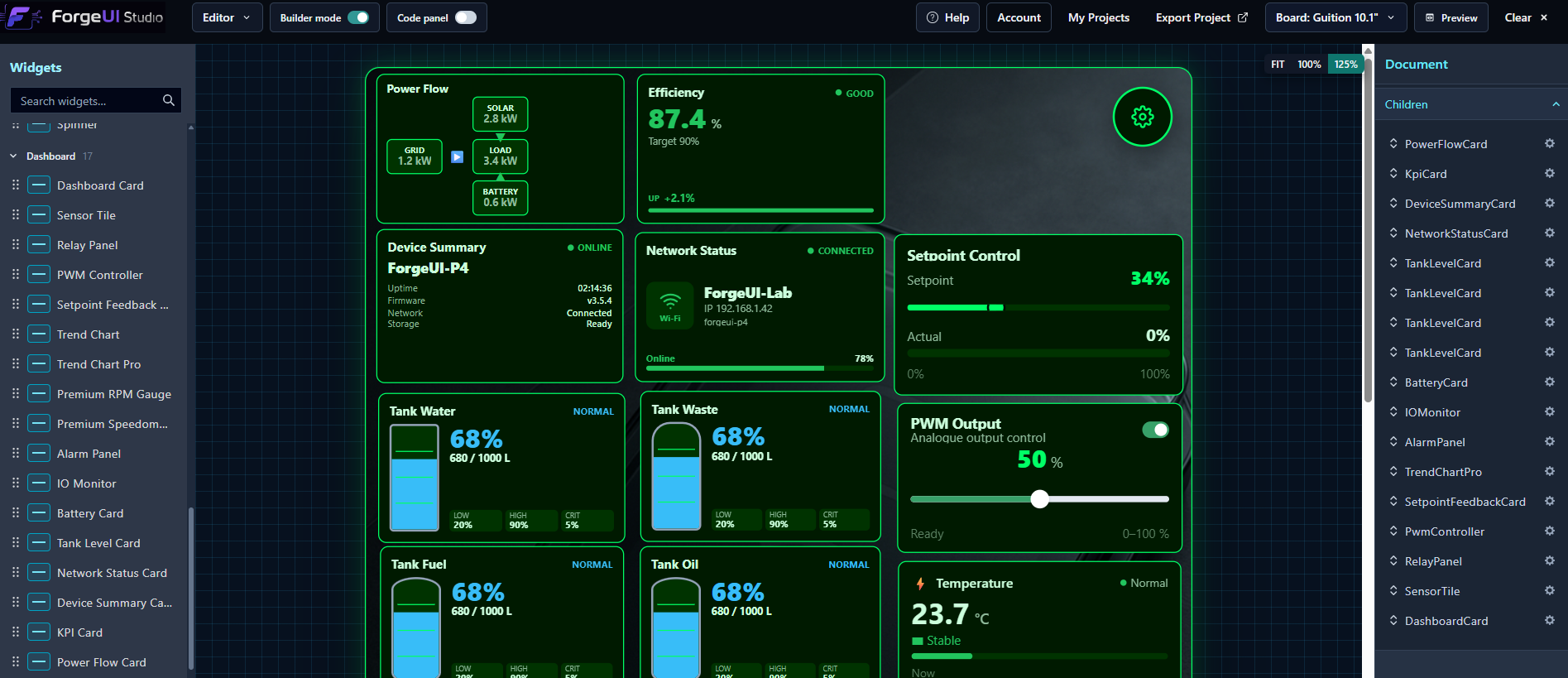
Drag and drop on a board-aware canvas. Edit properties in the Inspector, apply themes, palettes, backgrounds and assets, then save your Hosted project.

Browser-based embedded UI development
ForgeUI Hosted Studio is a visual LVGL UI builder for embedded interfaces and HMIs on supported ESP32-P4 and ESP32-S3 displays. Drag and drop controls or use an optional AI Layout, generate native C, simulate your LVGL 9 UI in the browser, then build ESP-IDF firmware and flash supported hardware.
Check supported board profiles for display capabilities and browser flashing requirements, or explore standalone ESP-IDF project export for local development.
Open the browser-based Studio with no local Studio installation. ForgeUI Studio is free for personal and non-commercial use, with no time limit. Business / commercial use requires a Business licence. AI generation uses separate AI Credits.
Premium Native Instruments
Premium RPM Gauge and Premium Speedometer are editable, configurable Hosted Studio components with native LVGL output and generated Runtime SDK APIs.
Physically proven together on a Guition JC8012P4A1C ESP32-P4 10.1-inch display at 800 × 1280 portrait.
Widget APIs & firmware hookup →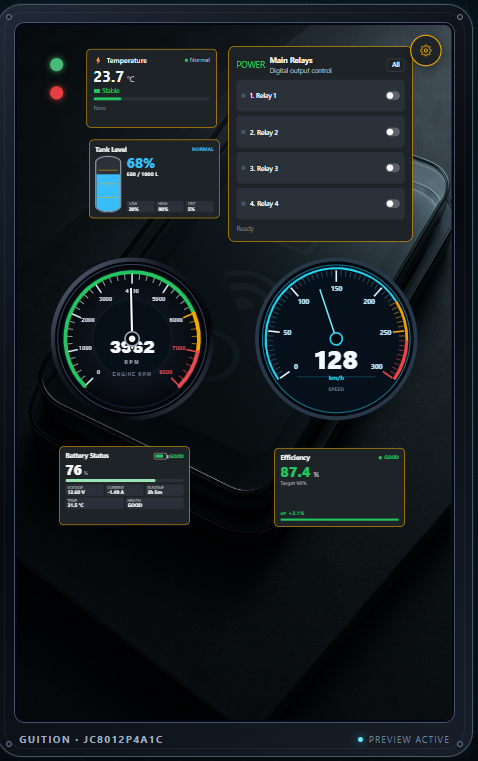
Searchable Component SDK
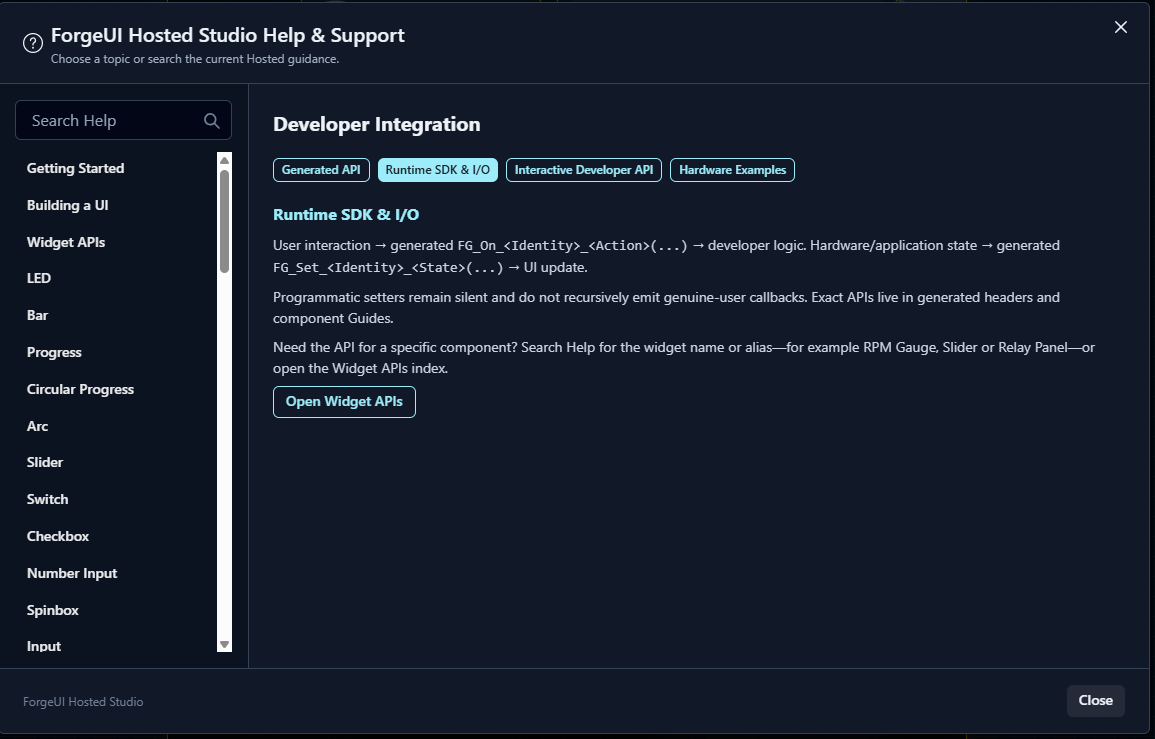
Hosted Help now lets you search documented components for properties, generated APIs, firmware hookup and I/O guidance. Use the generated Runtime SDK to carry sensor or application state into a widget, and generated FG_On_* hooks to carry real touch interactions back to your application logic.
One engineering workflow
Drag and drop controls or start with an optional AI Layout, then refine your LVGL 9 interface on the board-aware canvas.
Generate native LVGL C from your design, with runtime APIs and hooks for application behaviour.
Run generated UI code with real LVGL 9.2.2 in the browser simulator. Hardware services and custom application C require the physical target.
Build firmware on ForgeUI infrastructure, verify the connected target and flash supported hardware through browser Web Serial.
Browser Build & Flash
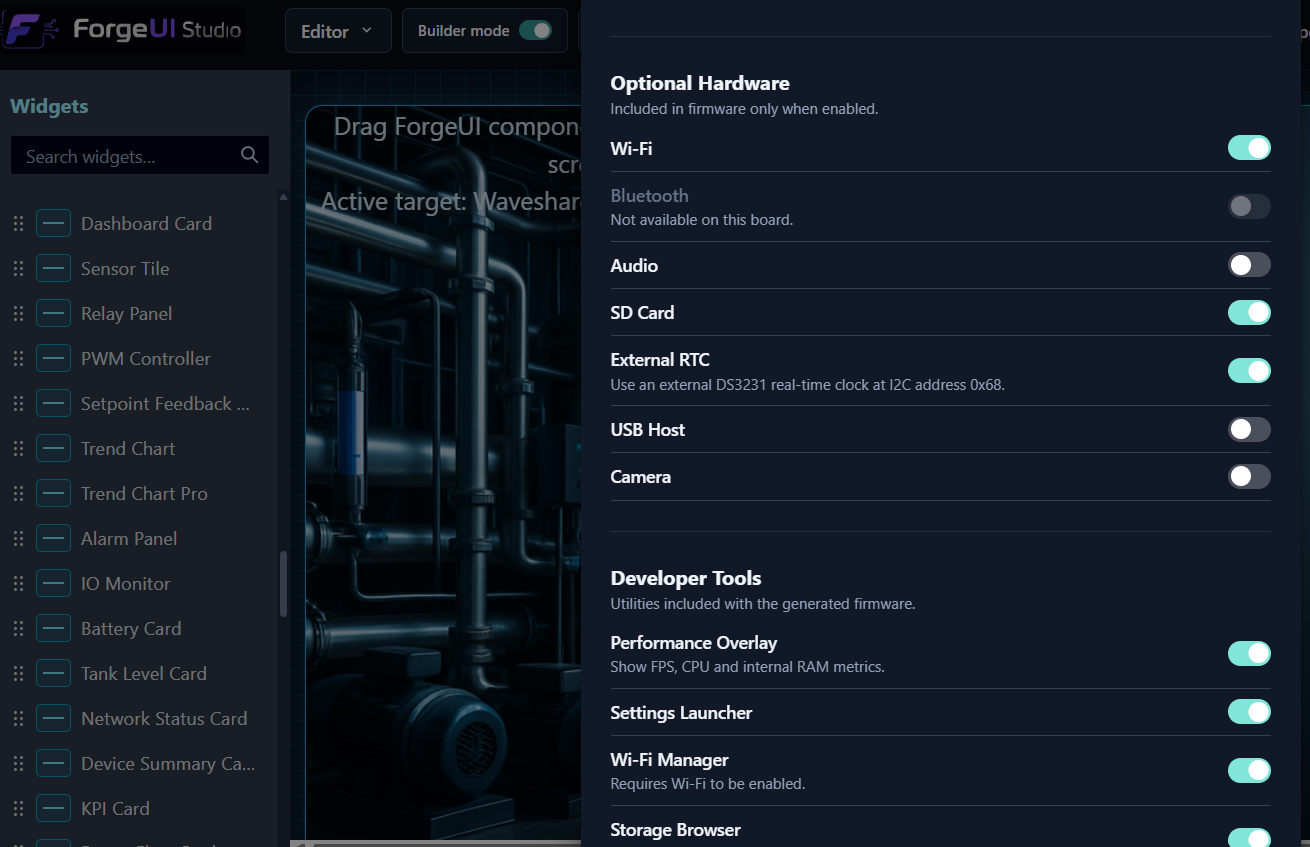
Hosted Studio builds your generated firmware on ForgeUI's build infrastructure, so the Hosted path does not require a local ESP-IDF toolchain. Connect a supported board through the browser, review the detected target, and flash the finished firmware directly to the device.
ForgeUI verifies the connected target before flashing. Browser flashing requires a compatible desktop browser, Web Serial and a supported board profile. Hosted builds typically take approximately 2–4 minutes.
Select a supported board
Design and generate
Hosted build
Browser connect
Verify the detected target
Flash and run
LVGL Simulator · Live in Hosted Studio
Run your generated LVGL interface before connecting the board. ForgeUI compiles generated C with real LVGL 9.2.2 to WebAssembly, so you can inspect native controls and navigation with browser pointer interaction.
Drag and drop on a board-aware canvas. Edit properties in the Inspector, apply themes, palettes, backgrounds and assets, then save your Hosted project.
Connect supported controls in the Inspector without hand-writing callback plumbing, then interact with the generated interface in real LVGL.
Build ESP-IDF firmware and flash a supported ESP32 board using browser Web Serial. Verify hardware behaviour on the physical target.
Hosted Sim runs generated, data-only display projects and preserves saved firmware hardware settings. Developer-owned Hybrid C, hardware services and application logic run through exported firmware or Build & Flash on the target. Generated component setters connect sensors, CAN, UART, ADC and application state to the UI.
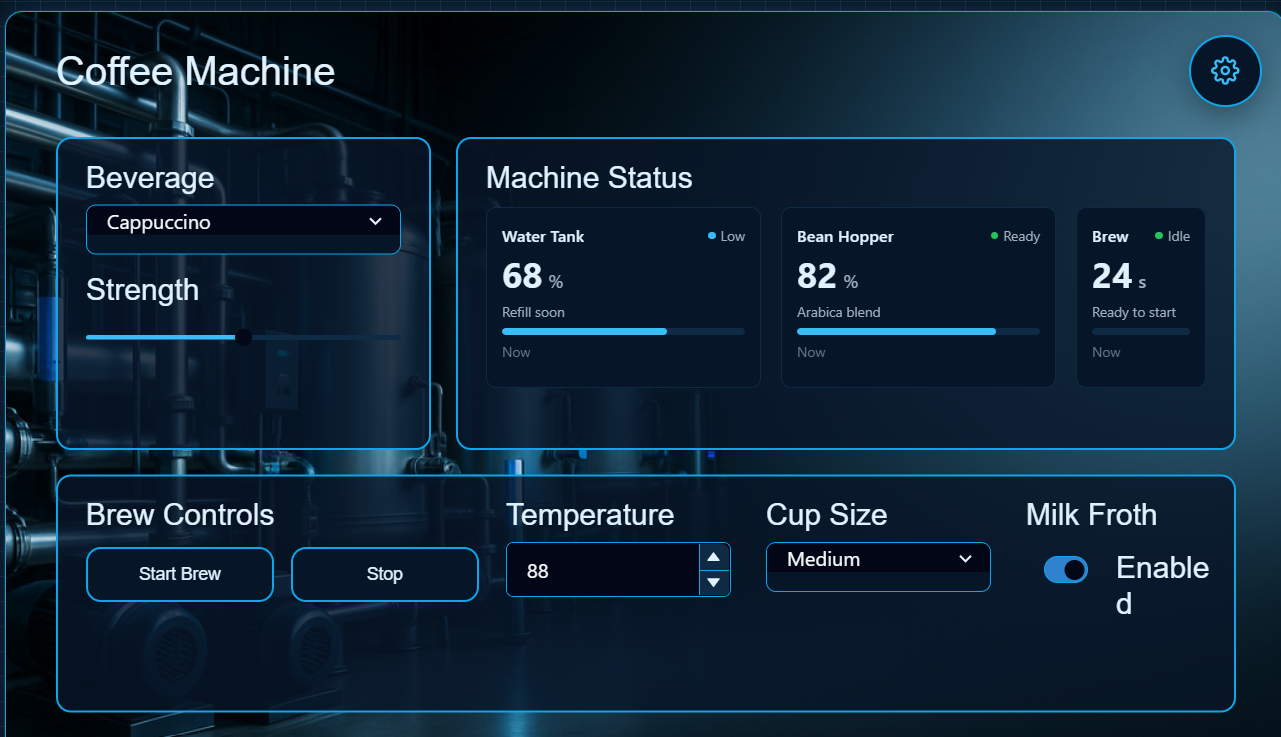
From background to editable UI
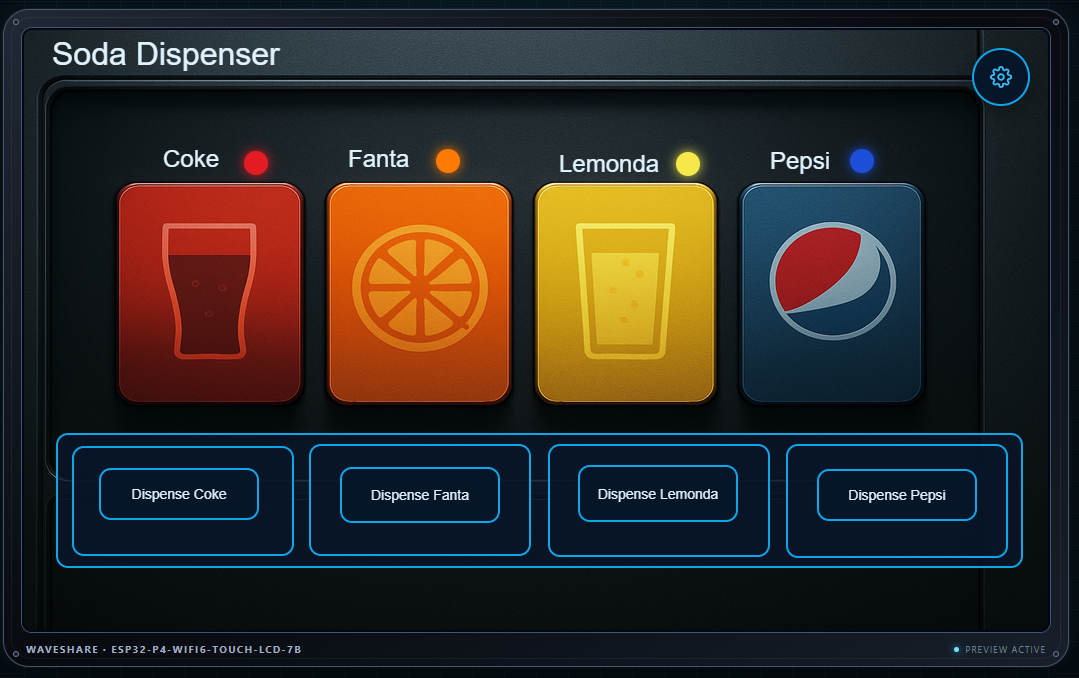
Combine a visual background with editable regions and ForgeUI controls for status, selection and machine actions. Preview the interface at the selected device resolution before export.
Two ways to work
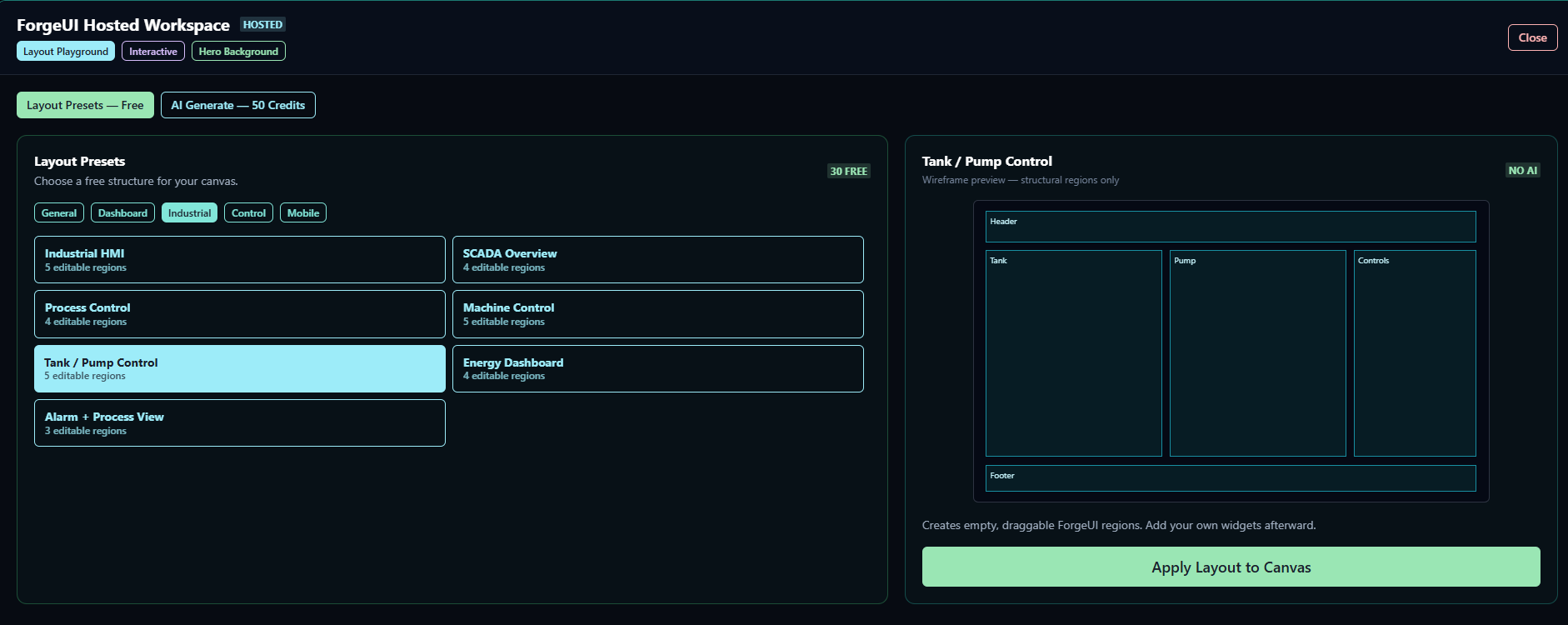
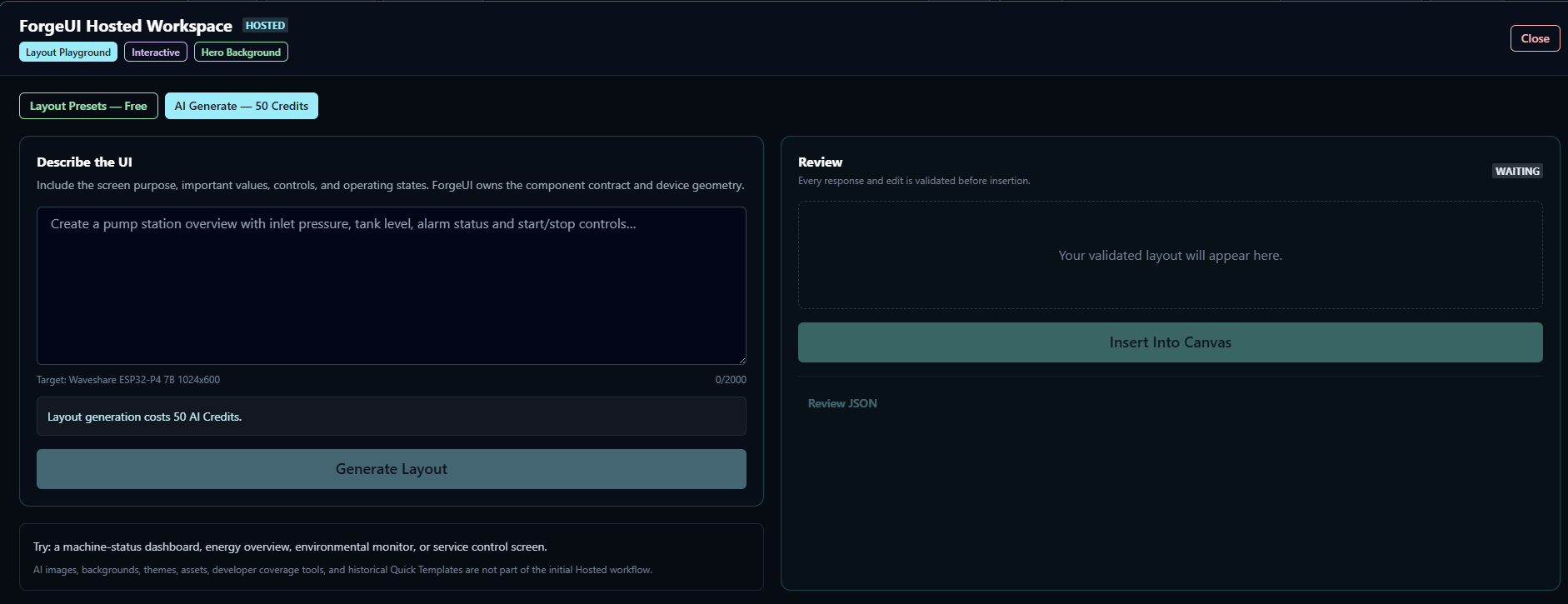
Hosted Studio remains a direct visual UI builder. Use free deterministic layouts and normal canvas editing, or bring in AI generation for specific creative and structural steps.
Free / direct workflow
Optional AI assistance
Board-aware AI Hero studio
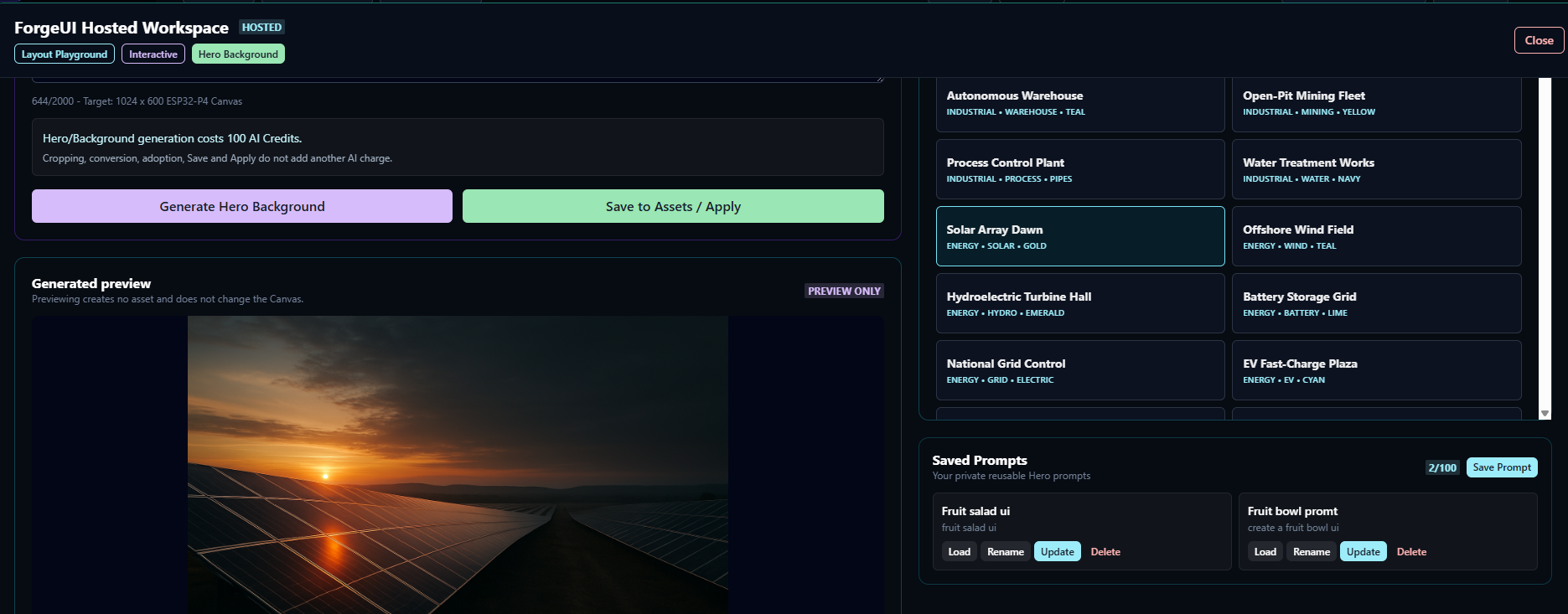
Select the board, choose a style and generate. ForgeUI automatically uses the target dimensions and orientation—1024 × 600 landscape for Waveshare or 800 × 1280 portrait for Guition—then lets you apply the result to Canvas and export it with the project.
The Guition workflow has been live-validated with a genuinely portrait-composed Hero. Preset browsing, prompt editing, cropping, conversion, saving and applying do not add another AI charge.
Theme and asset workflow
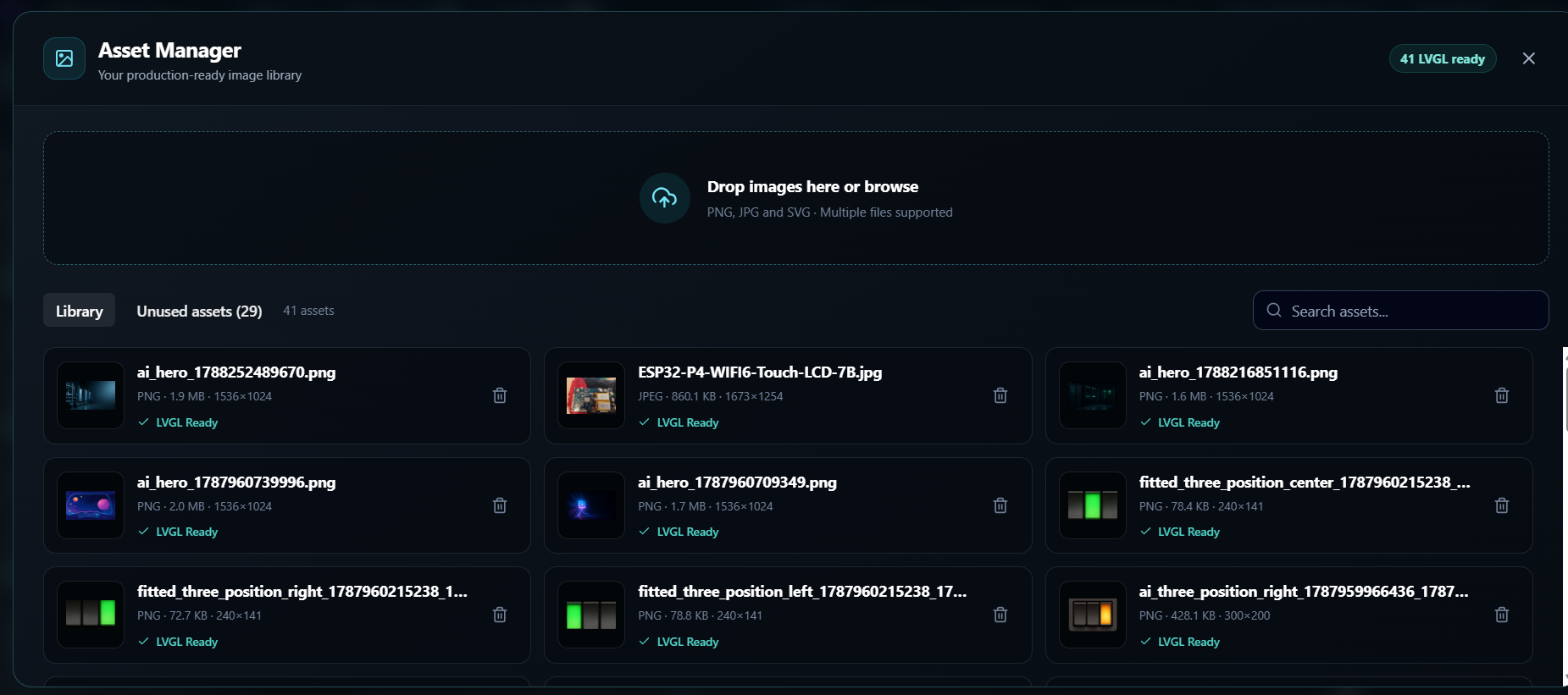
Compact Theme Manager navigation separates Palettes, Backgrounds and Asset Library. Assets can be viewed as Compatible, All assets, Heroes, Weather, Components or Other, so generated component states no longer compete with every background in one undifferentiated list.
Compatibility follows screen dimensions and orientation rather than a permanent board name. Badges such as HERO, 800×1280, PORTRAIT and COMPATIBLE make the active screen family visible.
Account-backed workflow
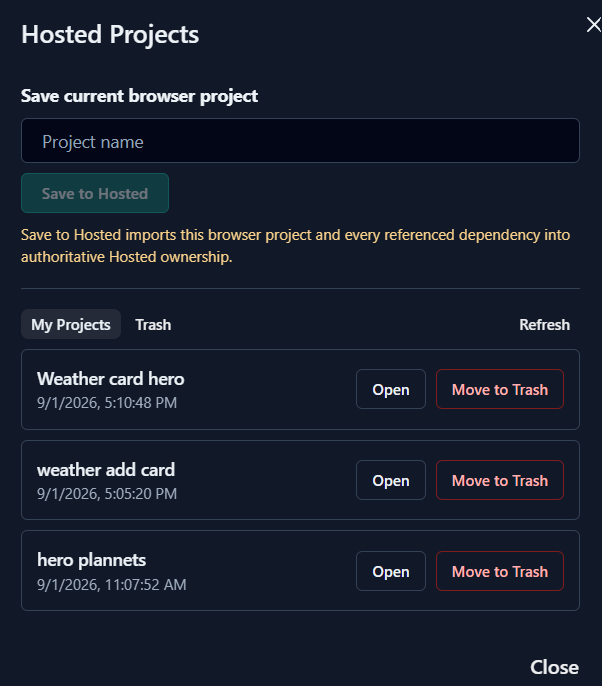
The Hosted asset manager prepares project imagery for LVGL use, while persistent projects let you save and reopen work through your verified account.
Two delivery paths
Use the Hosted path to build, connect and flash without configuring ESP-IDF locally. When you want the full source workspace, export a standalone ESP-IDF project with native LVGL output and continue in your normal embedded toolchain.
ForgeUI Studio
Use the downloadable Studio and local ESP-IDF toolchain for developer-owned projects, firmware builds, flashing and hardware integration.
Explore ForgeUI Studio →Hosted Studio
Verified accounts, persistent projects and assets, Hosted builds, target safety checks and browser flashing extend the workflow without taking ownership of your exported application logic.
View access boundaries →Enter the browser-based application today. Public registration and prepaid Hosted access are available under the current Hosted Access Terms.
Read Hosted Access Terms →